August 23rd, 2008
Cat Handler:
You don’t have as much time, but I feel certain you can do this well:
http://www.press.uchicago.edu/Misc/Chicago/921532.html
Best,
the stingo
Posted in Essays | No Comments »
August 8th, 2008
Executive Board
Bridg Allen
Gary Gerloff
Armistead Peyton
Joe Spivey
The Stingo
Honorary Members
Gene Rudy:
(Shaman at Large)
Howard Tate
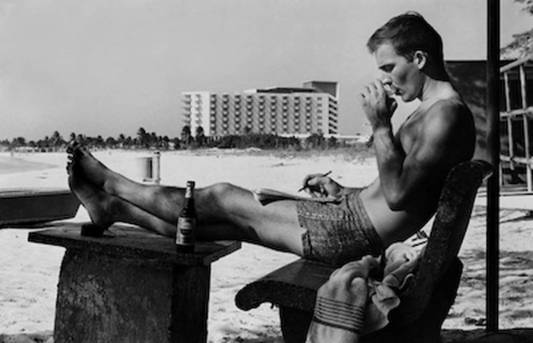
Hunter S. Thompson

Phil’s

The Westhampton

Gonzo poster

Hunter on screen

Tremelo Joe peeling off in his new sportscar
|
RRI/KoMZ
Triennial Board Meeting
Richmond, Virginia
July 18, 2008
The July 18, 2008 meeting was an event of triple significance:
The meeting convened three years to the day after our previous meeting, which was held on an island off the coast of Carolina to celebrate the birth, life and transmogrification of Dr. Hunter S. Thompson, late of Woody Creek, Colorado. July 18 is also Dr. Thompson’s birthday, and not surprisingly, a movie about his life and work premiered on the day of our meeting in 2008.
A quorum of 4 board members was present. Armistead “TroutBear” Peyton was unable to make the trip from Seattle, Washington, though he was rumored to be winging his way toward Mecca at any second.
The board dined on sailor sandwiches at Philip’s Continental Lounge and then adjourned next door to the Westhampton Theater for the premier of Gonzo: The Life and Work of Dr. Hunter S. Thompson.
After the film the board re-convened at Phil’s Lounge for a business meeting.
The minutes from a memorable earlier meeting, three years before, were missing. No one could recall serving as secretary. Thus, the minutes were approved as unread, with no additions or corrections.
Old Business: The Stingo noted for the record the election of Gene Rudy as Shaman at Large and also the election of Howard Tate and Hunter S. Thompson as honorary members at large.
New Business: The board voted unanimously to honor Howard Tate with a reception hosted by Mary Lee Allen at the Prestwould. The motion included a provision that John “Blind Johnny” Whealton be invited. Gary added an amendment that no green M&M’s would be served.
An addendum to congratulate honorary board member Howard Tate was approved. Mr. Tate’s hot new “Blue Day” CD is now moving rapidly up the R & B charts – an optimistic foreshadowing, all agreed, before its official worldwide release on August 12, 2008.
The board then entered into closed executive session to discuss membership matters and related issues including the nomination of new candidates for general membership.
When the regular session resumed, the board discussed a journey to Manhattan.
Next, the board considered Litt Allen’s offer to provide his oceanfront mansion on Hatteras Island for an executive retreat in September. A motion was made, seconded, and carried to accept Litt’s gracious offer. The dates are September second through fifth. Board members’ spouses are invited to attend.
The board discussed the matter of Andrea Palladio’s 500th birthday, which occurs this year. Palladio is the seminal Italian architect whose designs influenced many American buildings from Monticello to the Capitol in Washington DC. A motion was made, seconded, and carried to commemorate Palladio’s 500th birthday.
Finally, the board adopted a resolution to congratulate the organization on its steadfast resolve and progress towards its stated goals.
The meeting was adjourned.
These minutes by my hand are given under my seal.

Bridg “Mr. Earl” (aka Speedo)
Read all about the RRI/KoMZ,
it’s history, strategies, and manifesto.
|
Posted in Essays | No Comments »
July 21st, 2008
Friday
We were gathered solemnly, the five of us, in the ops lot of the National Folk Festival on Brown’s Island in the heart of Mecca. The shadow of Yamasaki’s Federal Reserve building loomed behind us. It was Friday night, October 13, 2006, and we were paying rapt attention to the Guitar Slinging Idol of Millions (GSIoM).
“All right,” he barked. “Listen up! We got rules to review.
“First, never give up your golf cart. They’ve been stolen in the past.
“Next: Do not give up your walkie-talkie, even to a police officer.
“Third, do not give rides to anyone except performers, especially not to the old, infirm or handicapped. These golf carts are the property of the National Folk Festival, and we’re here to use them for the performing artists.
“And under no circumstances are you to drive your golf cart up that hill over there,” pointing jerkily to his left. “It looks like a short cut, but it’s dangerous. You could turn that cart over and damage it.”
We all turned to stare at a dirt road angled up at 45 degrees. It was full of river rocks, gravel and clay, and lay between two brick walls five feet high, perhaps 20 feet to the top. It looked like it might save about five minutes of driving time on the way to the Ukrops stage.
“Golly, that looks mighty dangerous to me, Mistah G,” I drawled. “I wouldn’t even think about going up that thing.”
As I spoke, one of the NFF staffers in a small John Deere all-terrain vehicle gunned his engine in the parking lot, and standing tall, ripped up the hill and pushed over the top. He cruised easily down the road to the left, erect, toward the Ukrops stage.
We all looked at the GSIoM in stunned silence.
After the briefing, an NFF staff member walked up to the GSIoM, pointed to a large pile of structural steel and signs and vinyl. “Say, could you fellows please help me move some stuff over here?” he asked innocently.
The GSIoM looked at him coldly and said, loud and firm: “No.”
When he left, the GSIoM looked at me and said: “He does what he’s supposed to do, and we do what we’re supposed to do.”
But we really weren’t supposed to do very much of anything that Friday night. There just weren’t many assignments for volunteer artist escorts. That night was comprised of hours of boredom pierced by moments of terror as the walkie-talkies crackled - but alas, the calls were not for us.
It got so cold that we had to huddle around an old 55-gallon oil barrel filled with scrap wood, roaring with yellow flames. We warmed ourselves and traded a few stories, like old men waiting for work. It was there that we learned about the GSIoM’s past - that he’d come back to Mecca from the West a few years back, after trying for 30 years to forget something awful that had happened to him years before.
Then he announced that it was time for a safety briefing. Down to the Virginia Wine Vendors tent, he said.
A shout went up and we hopped into our golf carts, walkie-talkies at hand, maps at the ready, puttering off down through the parking lot, past the ops trailer, past the bucket brigade and past the volunteer tent. At Fifth Street, we deftly executed a precise and synchronized demonstration of four swarming golf carts in figure eights, backward loops and wheelies worthy of the Shriners.
The safety briefing at the wine vendor was short but sweet. We lingered near the Times-Dispatch stage to hear the Lost Bayou Ramblers, a Creole band, then headed across the canal to the sweet Texas swing band sounds of the Quebe Sisters Band, from Burleson, TX. The sisters, Grace, Sophia and Hulda, were all Texas State Fiddle Champions.
We formed a caravan to head back across the canal to the Ukrops stage to hear LeVent du Nord, the French Canadian group out of Montreal, when something peculiar happened.
We had stopped at the ops center to warm ourselves at the barrel fire, and were heading back out when, without warning, the GSIoM took a sharp left at Short Cut Hill, and pressed his accelerator to the floor. With me riding shotgun and the Fashion Idol of Millions (FioM) in the back, he angled his cart straight up.
He made the first ten feet without a problem. But the cart stalled out, began to tilt up and back and drift downhill in a hurry.
The FIoM jumped off, shouting: “I’m outta here!” I bailed to the right, the cart still wobbling backward.
“There’s too much weight to make it to the top, you ambitious fool,” I cried. “You’ll kill us all!”
“You’re a trickster!” he shouted, nearly in tears. “It’s all your fault! You made me do this! I must get to the top of this hill!” He was off his head.
The cart rolled rapidly to the bottom. He spun his rear wheels, and headed back up again.
I shook my head back at the oilcan fire, and looked at the FIoM.
“What’s up with that?” I asked, watching warily as he rolled down the hill, transmission whining and clicking, then charged back up again and again, spinning wheels, churning and spitting out round river rocks, then rolling slowly back down again.
“You don’t know?” she said, incredulous. “He’s still looking for whatever it was he lost a long time ago.”
“Or, actually, whoever.”
And then she told me a story I’ve never forgotten.
Back in 1968 at age 17, it seems, he’d borrowed his father’s brand new yellow and black-topped Mustang convertible to drive to school, then decided on a whim to skip it all and break free for a joy ride in the country with his best friend.
They headed happily west in the innocent manner of their youth, out Route 60 to Cumberland County, a case of PBRs from Tom’s Jiffy Mart in back, driving lonely country roads in search of lakes or ponds or whatever lay at the ends of Virginia’s rural two-tracks.
Sliding down one particularly treacherous slope, they fishtailed out in mud and leaves three inches deep at the bottom, sprawled into a ditch, and tumbled the convertible over sideways in a 360-degree rotation.
A shower of foam, half-empty cans, full six packs, cigarette butts and ashes floated eerily about the interior for what seemed like hours suspended in space.
When the car at last settled back to earth on its wheels, he could hear a muffled voice calling his name from afar. He opened his door, walked around the car, looked through the woods and under the crushed Mustang, but could not locate his friend.
There was nothing to be found anywhere, except for a faint and pervasive scent of misery. It grew more pungent by the minute.
He looked in the back seat and found his friend stuffed halfway into the trunk from the inside, still calling his name.
They limped slowly back to Mecca, the front end of his father’s brand new Mustang pointing in one direction while the wheels headed in another.
The following few weeks could only be called an unmitigated disaster of mythic proportions.
Already bounced from three high schools, his father withdrew him from the fourth, then booted him from home, throwing Jack Purcells, yellow pants, seersucker pants, white ducks, bow ties, blue blazers, wing tips, khaki suits, half-full bottles of J.T.S. Brown, LPs and 45s of obscure soul singers, Safeway nametags pinned to starched white aprons, McCarthy-for-President bumper stickers, and finally, his beloved madras shorts, out onto the lawn of his formerly pristine West End pied-à-terre.
His mother wept openly as she watched him limp, Barry Lyndon-like, out onto Monument Avenue to hitchhike west, carrying a paper bag stuffed with a few belongings, a broken-handled guitar case under his arm.
Worst of all was when his precious girlfriend, the beautiful Betty Black, whose bleached blonde hair, frosted like straw the color and texture that alike he loved (The hair that he worshipped from near and far! The hair that stood tall and taunted him in a frozen and laminated “Poof!” The golden lacquered hair of his now-lost youth, clandestinely rolled up in soup cans for the desired effect, three cans of aerosol hairspray hissed upon it daily!), promptly and ruthlessly dropped him.
She said she wanted a success with which to share her sun-bleached hair, and most certainly not a failure like him.
“My Mumma says you’re born to lose even if you are dying to win,” she cried, slamming the hollow, eight-paneled suburban door in his face, her flaxen locks impervious to the breeze now fluttering inside.
He was crushed, sullied, and sunken to rock bottom. He stared at the concrete floor of her suburban 1968 West End veranda, hoisted his guitar case with its broken handle under his arm, and ambled slowly down the streets past the cul-de-sacs that circled the center of Mecca.
He wallowed in excruciating pain for three days, sleeping at first on the sweetly curved but rock-hard mahogany benches of John Russell Pope’s Broad Street Station, befriending the clerks at the all-night diner there, and begging for change from rail travelers during the day.
He hitchhiked to Virginia Beach, and dozed under the arching, windswept trees and shrubs on the dunes of 81st Street, panhandling in front of Grumpy’s restaurant across Atlantic Avenue from the socially-acceptable if shabby genteel Sinclair Hotel, trying to strategize for what looked surely to be a very bleak future.
Once, the FIoM said, she was lounging on the beach of nearby Sandbridge at night with a friend. She remembered it was 1968 because they were talking, outraged, about the recent, savage and unexplained murder of Bobby Kennedy, when a teenage guest known as “The Ace” (now a carnivorous attorney “defending” the rights of impoverished Hispanics in an obscure Southwest Virginia coal-mining town) came running across the top of the dunes from their cottage, shouting out loud: “Come quick! Come quick! - It’s the GSIoM! He’s under the steps outside! He’s drunk and he fell! He says he’s…he’s…he says he’s…’The Great Messiah!’ Under the steps!”
After that, all that anyone in Mecca heard of him was that he’d headed west. Whether he’d read Walker Percy’s assertion that in the South, we go north to escape, and west to die, is still unknown today.
Saturday
We were working our way slowly in the golf cart Saturday, through a crowd of 90,000 people sprawling across Brown’s Island, nudging a few here and shouting out warnings there.
“I could pick their pockets, and they’d never know,” the GSIoM said.
We were on our way to the Ukrops stage, but our progress was slowed because every fourth person wanted us to stop, to slap the GSIoM on the back, to shake his hand and to talk. The very picture of modesty, he obliged them happily.
Traffic backed up. People groaned. Someone kicked the cart.
But there were the shouts of recognition, the name-calling and the references to obscure music and performances from the past. A reporter from the local newspaper interviewed the GSIoM, not knowing precisely who he was, but from the attention paid, was sure that he must be someone.
Two women ran up to the cart to kiss him, hug him, and scream: “GSIoM! We’ve seen you hundreds of times! Where are you playing tonight? And when?”
“Hop in, girls, and we’ll discuss that while we play doctor,” he grinned.
But the walkie-talkie crackled. It was Rounder in the control tower, barking directions for the evening like an anguished dog.
We had four assignments, most of them simultaneous: At 6:15, one cart was to be at the Ukrops stage to deliver artists to the Comcast stage. At 6:40, two carts to the Genworth Stage to hustle artists to a CD signing at the Comcast stage; at 6:45, two more carts to the Regions stage to drop off artists to the Ukrops stage; and at 7:15 two carts to the Genworth stage to await further instructions.
Then came the nail in the coffin: one more cart to the Ukrops stage at 6:45.
“Good God Almighty!” he cried. “Did you get all that? I didn’t understand anything. WTF did he say again? Should I call him back? What’ll I do?” The fear of failure was palpable in his voice and in his eyes - even through his sunglasses.
His hands were shaking and he was sweating mightily. He dropped his clipboard and lit a cigarette.
“No problem. I’ve got it all written down.” I said. “Nothing to it.”
“That’s right,” he said, relieved. “We’re old hands at this. You and I know how to handle this stuff, don’t we?”
I said: “You gotta get all the carts together back at The Shack at 6:30 to handle the logistics. We’re short one cart for what they want us to do.”
“Copy that,” he said, and began snapping orders into his walkie-talkie, sounding like the cruel, feral, and extinct tiger-striped wolf of New Zealand.
“I don’t care if you have to throw ‘em off the bridge or sling ‘em under the coal train,” he screamed into his walkie-talkie. “Just be there at 6:30!”
He turned to me, strangely calm, and surveyed the crowd. “Do you think they’re here?” he asked. The sunlight was glistening golden off his silvery white hair and beard.
“Beats me,” I said. “There must be a hundred thousand people here now. How would you find ‘em anyway?”
He nudged through the crowd in his cart, pulling up at the Ukrops stage for a prime view of Chuck Brown, the Godfather of Go-Go, then switched off the ignition, and propped his feet on the dash.
“Let’s see,” he said, perusing the event schedule. “Where are we headed this afternoon?”
We looked at the schedule. There was a veritable cornucopia of American music on five stages spread out along the banks of the James.
There’d been Don Vappie and the Creole Jazz Serenaders at the Ukrops stage just before Chuck Brown started; then Willie King and the Liberators, followed by the Skatalites over at the Times-Dispatch stage; and Bob Cage, Tobacco Auctioneer over at the New Market stage. All of these performers were aligned for us within a one-mile stretch and a two-hour period.
While the GSIoM pondered his agenda, the FioM filled me in on his exploits, post-Mecca, back in the late 1960s:
It was a long and lonely train ride west, she said - just him, his paper bag and his guitar. In the Norfolk rail yards, he’d found a westbound freight, hopped aboard a Southern Railroad boxcar, and settled in. He pulled his guitar from its case, and worked his scales.
After three days, she said, the train slowed near Wichita, and he hopped out.
It was 110 degrees and a dry wind was blowing ashes in swirls all around him. The smell of burnt wheat lingered in his nostrils.
He gazed around at a flat and barren landscape punctuated by grain elevators and a few 1930s skyscrapers. The Arkansas River, sluggish, muddy and polluted, rambled slowly through the city. He was especially drawn to the golden grain - the fields of wheat waving lazily around the city. It reminded him of something, but he couldn’t put his finger on it.
He found a menial job on the line at the Coleman factory, rhythmically testing the blue and yellow globes on hundreds of lanterns daily. He located an efficiency apartment in the College Hill section of town, which really wasn’t much of a hill at all (and there was no college, actually), but it looked a lot like Mecca’s West End, full of modest 1930s Colonial and Tudor-style homes.
He was surprised one summer afternoon to hear a knock at his front door. He found his neighbor outside, a 62-year old with whom he’d had few conversations, asking a simple question:
“I’m putting together a trip to New Mexico to go fly fishing. Do you want to go?”
It turns out that he had moved in next door to the trout master of Kansas. For 40 years, George had been driving 16 hours through the night to fish the Rio de Los Pinos in the San Juan Mountains of New Mexico. The trip took place every June, at the dark of the moon. It lasted about a week, although some of the 30 or 40 individuals from four states who convened there stayed for two to three.
This was, in fact, a fly-fishing school made up of seasoned veterans, some second generation. Their numbers were dwindling and George was recruiting. The GSIoM signed up.
By the campfire on their first night out, he met a short man with dark, slick hair, heavy black glasses and the intense gaze of a genius. It was Bill Lear, a high school dropout who’d invented the car radio back in the 1920s. He’d sold the patent to Motorola for a generous sum and was now struggling with a new concept: a way to deliver music on demand inside a car.
“Can’t use a turntable, ’cause it skips on bumps,” Lear said. “And I can’t find a gyroscope that’ll steady it economically.”
The GSIoM looked at him shrewdly. “Have you thought about tape?”
With that query, the Lear eight-track stereo cassette was born. The GSIoM became vice president of sales and marketing for the new company - and a millionaire overnight.
But in his spare time, he was honing his guitar techniques.
In 1970, he and Lear took the Grand Tour of Europe. They wound up in a Swiss airport, where they stopped to admire a new and short-lived fighter jet, the P-16. For the entire tour, Lear had been complaining about commercial air travel. “You feel like you’re in a cattle car,” he said. “And it’s slow.” Worse than that, the genius pilot with the eighth grade education pointed out, “You’re not even flying - you’re being conveyed.”
The GSIoM pointed to the Swiss P-16 on the ramp and said: “Why not convert that aircraft to a ‘business jet’? With two pilots and five passengers, you could fly point A to point B at will.”
On that day, the Learjet 23, with its stubby wings, rakish windshield, sleek tiptanks and the same power plants as an F-5 fighter, was born. It offered astonishing performance, climbing to 40,000 feet in just over seven minutes. In one early publicity flight, the GSIoM and Bill Lear made a round trip between New York and Los Angeles in 11 hours and 35 minutes, including refueling stops.
The GSIoM was made a millionaire twice over. He began buying up the golden wheat fields surrounding Wichita. He kept working at his guitar with gigs downtown. He built a loyal following and a reputation as the city’s best guitar-slinger, bar none.
By the year 2000, he quit his job at Learjet, sold his farms and flew back to Mecca in his private Lear 23, painted a high-gloss, Day-Glo yellow inside and out.
“Light the candle and stand this thing on its tail!” he roared to the pilots as he settled into the cabin with his collection of guitars and titanium briefcase jam-packed with cash.
He’d accumulated a fortune in the golden fields of Kansas, and he wanted to go home.
Saturday Night
The rendezvous at The Shack in the ops parking lot came together without a hitch. We were all there on time, and the GSIoM made his assignments.
There was only problem: the fifth cart needed at 6:45.
“What are we gonna do?” I asked him.
“Watch,” he said. He tiptoed around the parking lot like Bugs Bunny, looking through spare carts, and then let out a long, low whistle.
“Ah. Here we go…”
He returned driving a golf cart clearly marked “M.F.I.C.” and said: “Hop in! We gotta go! They’re waiting for us!”
I sat down, and the FioM whispered the rest of the story in my ear:
Betty Black had not fared quite so well, she said sadly.
After she’d booted the GSIoM from her mother’s home in ‘68 without a second thought, she came across an older man in Mecca’s Fan District. He’d been discharged by the Navy for assaulting a non-com, and was hanging on Harrison St. beside The Village, selling bags of pot to strangers.
He’d stopped Betty casually on the street, and opened up his Navy-issue pea coat to reveal twenty ounces of marijuana in plastic bags. “They’re $12 each, but for you, I’ll make an exception,” he said.
His eyes gleamed like onyx.
She swooned. It was love at first sight. She took off with him and never looked back.
His name was Tom Racy. He was descended from one of the First Families of Virginia. One of his ancestors had served as a chaplain to “Stonewall” Jackson, and it was said that Jackson’s amputated arm was buried on one of the Racy farms near Chancellorsville.
The blissed-out couple found a farmhouse off Mountain Road in Glen Allen, named it “Ozone” and moved in together. It was conveniently located near the Interstate, the train station and the Trailways bus stop. Business was booming in the late 1960s and 1970s, and Tom was making money hand over fist.
Their parties would have embarrassed even Scott and Zelda Fitzgerald in their outrageousness.
“He may be a pirate,” Betty used to say, “But he’s my pirate.”
They adopted a couple of dogs: a Doberman they called “Dolt,” and something else they named “Zero,” who was clearly the smarter of the two. “Zero” proved his worth one Thanksgiving afternoon when he arrived at the farmhouse after a 24-hour absence, a fully cooked and stuffed turkey in his mouth.
The couple fawned over him for this act from that day forward, and forever looked down on the “Dolt.” Tom wondered whether the full bottle of Mateus that he and his friend Lusty had forced down the “Dolt’s” throat that night outside of Phil’s Lounge had actually harmed the dog as a pup. But then he shrugged, hoisted his pet raccoon onto his shoulder, and rolled himself a fat joint.
Things took a turn for the worse one evening when Tom returned from a business meeting at the Pit Stop on Patterson, every bone in his right hand crushed. It had somehow found its way into a vise, with extreme prejudice applied. He began to entertain second thoughts about the business in which he was engaged; Betty was about to bear a child, the first of two daughters.
Tom cashed out of the drug business, bought an Alfa Romeo dealership in Mecca and flourished for a time, until, alas, the Italians announced that they’d no longer be exporting GTVs and Spiders to the states.
They both descended into a deep depression. He sold his remaining Alfas, saving his favored 1965 GT convertible.
One sunny Sunday morning in 1995, Tom and Betty and kissed their daughters goodbye, hopped into the GTC with the top down and roared off to Nags Head for a day in the ocean.
Betty’s bleached blonde hair blew unnaturally in the breeze.
They ate lunch and shot a few games of pool at Sam & Omie’s, then hopped back into the GTC. Without hesitation, Tom drove straight across the Beach Road, gunned the 1600 cc engine, listened to its dual Webers purr, screeched the Michelins in second gear one last time, kissed his wife goodbye, and drove straight off the end of Jennette’s Pier into the ocean, laughing like a madman.
“Fuck ‘em if they can’t take a joke,” he was heard to shout on their way down.
***
After all the passenger pick-ups and drop-offs on Saturday night, I found the GSIoM face down in a ten-dollar Fishboat from the CroakerSpot booth down by the Times-Dispatch stage.
The Fishboat is an appetizing and abundantly layered mixture of thickly sliced french-fries, salt, ketchup, deep-fried lake trout, a huge slab of cornbread, with grilled onions and peppers splayed across the top.
The GSIoM’s beard was buried deeply into it like one of the horses he’d fed back in Kansas, the ones that chowed down on their grain, nose deep in a feedbag.
All of a sudden he looked up, his eyes bulging, and issued a muffled cry:
“Mmmmrrrgghhfff?!!!???”
We were shocked to see him mobbed by a bevy of blondes, ages ranging from 5 to 35 years. They were calling his name and reaching out to touch him. They were squealing and laughing, shouting that before she died, their Mumma had always told them they’d find him at the NFF.
“Here he is! It’s the GSIoM! He’s really here!” they crooned in glee.
They were the golden-haired daughters and granddaughters of Betty Black.
First they circled him, and then they over-ran his golf cart, chanting his name, kissing him and proclaiming themselves his biggest fans ever. They hopped in on top and over him, legs and arms akimbo.
They piled in the front and in the back, the smaller on top of the older, some jumping on top of the roof, all the while chanting his name, and reaching out to him, screaming in delight, as if their future were no longer deferred.
They took off in his golf cart off down to Fifth Street, scattering to the wind whisky and wine bottles, beer cans, clipboards and then the four precious walkie-talkies, out in every direction — up, down, front, back, left and right — the golden girls hooting and cackling in the darkness as they headed back to Short Cut Hill, scene of Friday night’s debacle.
The GSIoM was in heaven.
We followed and watched them weave through the crowds, as the girls sang over and over, to the tune of “The Man Who Broke the Bank at Monte Carlo:”
“He’s the Guitar Slinging Idol of Millions!
They dashed toward the danger of Short Cut Hill with glee.
The GSIoM slowed his cart down, then angled it in front of the hill for a direct assault. He counted heads in the cart, estimating the total weight. He was gritting his teeth and sweating profusely.
He glared back at me. “You idiot!” he snarled. “It takes more weight, not less, to get up this hill.”
With that, he gunned the cart, sweetly squeezed the golden thigh of Betty Black’s oldest daughter, and roared away, bouncing mightily, up and over the hill.
At the top, he looked back down on us all in the parking lot, cavalierly tipped his baseball cap, grinned squarely and pointed to his teeth, then rode off into the blackened night toward the orgiastic promise of the green-glowing Ukrops stage.
The crowds on the road now joined in the chant:
“He’s the Guitar Slinging Idol of Millions!
“He’s the Guitar Slinging Idol of Millions!”
The Skatalites were just finishing up their last song of the evening. When the cart, piled with glistening descendants of Tom and Betty Racy, reached the stage, total silence greeted them.
A short Italian dullard in a tailored black suit, thin white cotton shirt and skinny black tie reached down to a velvet-lined guitar case and handed the GSIoM his favorite Telecaster.
He looked at it warmly, and gave it a kiss before stepping out into the green lights of the stage, two hundred thousand waiting eyes looking up to him, anticipating they knew not what.
Betty Black’s daughters and granddaughters stood in awe, their collective blond hair glowing chartreuse in the blinding light.
He struck a chord: “Thwaaannnnnnnngggg!” The Telecaster purred like a tigress.
The crowd roared.
“Y’all talkin’ to me?” he screamed into his microphone.
Fifty thousand people on his left wailed: “The Great Messiah!”
On his right, fifty thousand more screamed: “Under the Steps!”
“The Great Messiah!”
“Under the Steps!”
“The Great Messiah!”
“Under the Steps!”
“The Great Messiah!”
“Under the Steps!”
Over and over they beseeched him, until he launched into a blistering 45-minute set of Psychedelic Dixieland tunes.
It was electric, and it was good.
A hundred thousand people chanted in unison for three encores, communing together as he harmonized with the stars above.
The daughters and granddaughters of Betty Black collapsed backstage in orgasmic delight.
Then as quickly as it started, it was over. The girls hugged him. He kissed each one.
When he was finished, the GSIoM looked over at me and winked. “Don’t y’all be tellin’ me how to get to the top of this hill,” he said, wagging an index finger.
Whatever it was that the Guitar Slinging Idol of Millions had found back in 1968 under those steps in Sandbridge, then in the stark yellow wheat fields of Kansas, and later, on the babbling trout streams of New Mexico, he had made it available to all from this stage of the National Folk Festival that he now owned, he alone with his guitar.
He hopped back into his golf cart, surrounded by the sweet, singing, glowing daughters and granddaughters of Betty Black
And so they nudged on, carts against the crowd, nosing noiselessly into the future.
Posted in Essays | No Comments »
July 11th, 2008
All:
I have spoken recently by means of that enduring modern convenience, the landline, to one James Feral “PoochieDred” Gerloff, in re: the HST film debuting next Friday, July 18 at the Westhampton Theater 2 in Mecca’s gilded, leafy and soothingly tranquil West End.
Mr. Gerlf opines that he would prefer to attend the Friday evening event, as his Saturday schedule is full of odd and benevolent requests, like the appearance at a pit-cooked barbecue held in a smoke-filled quonset hut out on Jeff Davis Highway, the vegan political activist fundraiser to benefit the plight and destiny of the poor, much-maligned pig, the lengthy mediation session between the two North Carolina factions currently squabbling pettily over the correctness of clear or red sauce, and of course, the recently announced study group chaired by James A. Baker that is at this very moment pondering the future of the Chesapeake Bay Oyster — and more specifically, the much-sought-after-for-its-
succulence-and-one-of-a-kind-flavor Chincoteague Salt Select.
And then there is that brutal, and possibly violent, reconcilation session between the Knights of Columbus and the Scottish Rite Temple. G sez it’s a little like trying to unite the Shia’s and the Sunni’s, and that, as the world-famous Cat Handler, he’s the only human being on this planet capable of getting one side to pet the other side’s kitty.
His calendar is full, as you can see, and this brief rundown does not even mention his long and demanding list of performances that night, like at the Positive Vibes Cafe, Dogwood Dell, the Hollywood Bowl, Blues Alley in DC, House of Blues in Atlantic City, the New Stax/Volt Museum in Memphis, Sam & Omie’s at Nags Head, the Home for Aging and Alcoholic Fishmongers of Topsail Island, all capped by a midnight show at the Slipper Room in Manhattan’s Lower East Side, known for its raucous bump-and-grind burlesque acts performed by the frustrated female advertising executives of New York.
Then there is the grand litany of radio, television and blogger interviews, but they are altogether too numerous to mention here.
In other words, we’ll be viewing the new Gonzo film on Friday night, the 18th.
Gerard sez we can gather prior to the event either at his house, or the one place in this ever-expanding universe of his that he won’t be visiting on Saturday, Phil’s Lounge. He seemed to be lusting mightily after the renowned and sumptuous pastrami and knockwurst-laden Sailor Sandwich there, which, unlike each of us, has not changed a bit in forty years.
Mr. Earl has offered to chase down advance tickets for us. Please respond accordingly to this missive asap.
As a special bonus, the Big G (little od) has offered to invite one right reverend “Surfer John” to the affair. As our pastor for the evening, Johnny promises to bring along a rare and dog-eared copy of the ‘28 Episcopal prayer book, just in case we run into trouble.
The film gets great reviews; some call it the best of the year so far. One highlight: Pat Buchanan recalling that Thompson once labeled him handily as “Davy Crockett swinging from the parapets of the Nixon White House.” Ponder that for a moment, if you will.
yrs til Iran learns to photoshop a little better, I remain,
stingo the embellisher
Posted in Essays | No Comments »
January 12th, 2007
I. Star Time
“So now ladies and gentlemen, it is ‘Star Time!’ Are you ready for ‘Star Time?’
“Thank you, and thank you very kindly. It is indeed a great pleasure to present to you at this particular time the hardest working man in show business, ready to sing:
“‘I’ll Go Crazy,’
“‘Try Me,’
“‘You’ve Got the Power,’
“‘Think,’
“’If You Want Me,’
“‘I Don’t Mind,’
“‘Bewildered,’
“’The million-dollar seller, ‘Lost Someone,’
“’The very latest release, ‘Night Train,’
“‘Let’s Everybody Shout and Shimmy,’
“Mr. Dynamite, the Amazing Mr. Please Please himself, the star of the show, James Brown and the Famous Flames!“
– Introduction, “James Brown, Live at the Apollo,”
Oct. 24, 1962
The first time I heard James Brown in the early 1960s, he was wailing and crying into the dark, humid, summer Mecca twilight from a crisp and tightly organized 31 minutes of live vinyl magically imbued with pure, visceral, syncopated bliss.
I like to think of that moment as akin to that of the man on the banks of the Mississippi, many years earlier, whose ears pricked up in ecstasy at the sound of Louis Armstrong blowing his cornet from a riverboat heading downstream at midnight.
He hooked me – a white teenager living in relative comfort in the West End of the former Capital of the Confederacy – on the music of African Americans singing their way through centuries of unspeakable anguish.
A Jewish record producer once told me that this phenomenon – of ‘60s whites addicted to black music – was known in the business as a form of racism, but I don’t think so.
It was an epiphany, a realization by way of music that our own white establishment did not have the first clue about the inspirational power of the human heart in conflict with itself. Or, if they understood it, they feared it gravely.
Three seminal live albums from that time punctuate this epiphany eloquently: “Chuck Jackson on Tour” (with a cover shot of the singer in his uptown, iridescent, sharkskin suit), “Otis Redding Live in Europe” (a white suit on the album’s front, a pink suit for the back), and “James Brown Live at the Apollo” (no suit at all – just a heavily sweating, pompadoured black man in white silk shirt, pleading painfully into his microphone).
They form the three caryatids supporting the mythic pediment of rhythm & blues today.
And James Brown, whose perfectly formed live album came first, oozing an affirmation of life and love, strength and sorrow, disappointment and redemption, stands front and center, a Buddha borne to us via the ragged streets of Augusta, Ga.
Black or white, we’ve all suffered through the years with death, divorce, wars, tragedies, and multitudes of joys turned miseries. But no matter how difficult the times, we’ve found solace always in the knowledge that we can pop “Live at the Apollo” onto the turntable, into the cassette or the CD player, and by the time he’s done, we are too.
At the end of those 31 cathartic minutes, no one walks away unpurified.
I’ve listened to it thousands of times, in Mecca, in Deltaville, in Warrenton, and in Kansas, Kentucky and Carolina. It does not disappoint – ever.
His music is this powerful:
One very successful, retired businessman in Mecca, an acquaintance who turned me on to that first James Brown album in 1963 – now a doting father and grandfather living well near River Road – once confided in me his sole regret after 60 years on earth. It occurred famously at a 1965 concert hosted by the K.A.’s of Randolph Macon featuring James Brown and the Famous Flames. When J.B. ripped off his cufflinks and threw them out to the audience, my friend missed catching them by one inch.
He confessed it with a grimace, his eyes downcast. He was sorely dismayed.
Everyone wanted a piece of James Brown back then, it seems.
II. Are You Ready for the Night Train?
When that live concert at the Apollo was recorded, its final song had just been released as a single. James Brown introduced the tune himself to a screaming, squealing, hysterical audience:
“You know I lost someone?
“But I know where I’m gonna find ‘em…
“All aboard?
“All aboard?
“All aboard – For ‘Night Train!’”
In a rumbling and rhythmic tour of the eastern seaboard that he must have known painfully well by way of the segregated ‘50s and ‘60s, Mr. Brown took us to the cities that made him famous, and that he, in turn, made famous for us in return.
So here, we have a few words from the newspapers in each of those towns – their eulogies in the days after his death on Christmas 2006, the victim of congenital heart failure at age 73:
Miami, Florida!
“In the ’60s, that era of strivers and change, Brown made himself an icon not simply of black success, but of black self-determination. And for as much as people wore out their shoes dancing to hits like Papa’s Got A Brand New Bag and I Got You (I Feel Good), for as much as they pumped their fists to sociopolitical anthems like Say It Loud — I’m Black and I’m Proud, it was that sense he gave of being self-contained, unbought and unbowed, that set him apart.
“That’s why, when Martin Luther King was shot and more than 100 American cities burned, Brown could go to Boston and ask angry black people to stay cool — and they did.
“It was more than that he was famous and had hits. How many riots did the Supremes ever head off? If Miami was on the verge of racial warfare, would anyone call Beyoncé?”
Leonard Pitts, Jr.
The Miami Herald
Atlanta, Georgia!
“The Famous Flames played for at least two hours — punctuated once or twice by James walking out to the microphone (shirtless, with a towel around his neck) to announce he’d be joining them pretty soon, which only served to whip up the crowd more. Around 10:30 p.m. when the announcer said something about welcoming “America’s Soul Brother Number One,” the place erupted in a frenzy of sight, sound and sensuality.
“What I saw that night was clearly dangerous stuff, exactly what the elders were warning us against: The combination of a driving beat, the sexual innuendo in his lyrics (at least those you could understand), the potent mixture of alcohol (on sale in the arena) and the raw energy of Brown’s stage presence lit a fuse.
“Good gawd, he was good!
“I had never seen anything like it and, in 40 years of concert-going, still haven’t. The Godfather was in full command, of the Flames, of the stage, of his dancers and of the crowd — especially those two white boys in the audience.
“As management consultants like to talk these days, I was experiencing a transformational change. So was, it turns out, American culture.”
Mike King
The Atlanta Journal-Constitution
Raleigh, North Carolina!
It’s still enough to give you goosebumps — the way James Brown huffs out “Raleigh, Nawth Carolina” as he sings about the Night Train, vintage 1962. Little old Raleigh, some may have thought of it, but in his soul classic Brown groups the Tar Heel capital right up there with Miami, Atlanta, Washington and other stops along the line.
“And don’t forget New Orleans, the home of the blues.” Could Raleigh have been in better company, or have gotten a better advertisement as a place where soul music, smoking hot R&B, was part of the culture? As much as he could with that one brief reference, James Brown put Raleigh on the “happening” map.
“When “Night Train” came along, the man who became known as the Godfather of Soul was heading into the prime of a career that was supposed to take him, on New Years Eve, 2006, to the stage of a blues club in New York City. But this famously energetic showman — the leaps, the knee-walking, the sweat-drenched frenzies of emotion — finally could summon his performer’s fire no more. Death came early on Christmas morning, from a sudden onset of pneumonia at the age of 73.
“Many would rank him as the very greatest at what he did, which was not simply to thrill audiences with his stagecraft but with a music that was one of America’s signature late 20th-century sounds. It flowed from Brown’s experiences growing up black in rural South Carolina and on the poor side of Augusta, Ga., and was the inspiration for many performers to come, both black and white. His music evolved over the decades, so that it always sounded fresh, but never lost its raw force. Never were horns and saxes put to better use in their back-up role as Brown urged his fans to get into their funky dance groove. He didn’t have to urge very hard.
Editorial
Raleigh News & Observer
Washington, D.C.!
“Generations of musicians listened to James Brown, looked at him and took what they could, regardless of the kind of music they played. Much imitated, he was ultimately inimitable. Someone once suggested Brown was to rhythm what Bob Dylan was to lyrics, and there’s no arguing that when it comes to foundations of American popular music, Brown is right there with Louis Armstrong, Duke Ellington, Jimmie Rodgers, Hank Williams, Elvis Presley and Dylan — creators whose innovations changed everything around them.”
Richard Harrington
The Washington Post
Uh, Richmond, Virginia, Too!
“Before the mid-1960s, Brown performed an unknown number of times at Jackson Ward’s Hippodrome Theater and made several appearances at the Landmark Theater, then called the Mosque.
“Beginning in 1969, Brown’s local appearances were covered extensively by The Times-Dispatch and The Richmond News Leader. From that year until 1974, Brown had at least 10 concert dates in Richmond, sometimes giving two shows a night. He gave his first show at the Coliseum in 1972.
“In 1969, Richmond Mayor Phil Bagley Jr. proclaimed Dec. 7 — the day of two concerts by Brown — “James Brown Day.” Bagley said he did so because he had been told Brown was considering retirement and might not return.”
Larry Hall
The Richmond Times-Dispatch
Baltimore, Maryland!
“Over the years, Mr. Brown had some personal troubles, including drug and alcohol abuse, domestic violence and unpaid taxes, that didn’t sink his career, but somewhat stained his image. In the late 1980s, while under the influence of drugs, he intimidated people at a public gathering before leading police on an interstate car chase. He spent more than two years in prison and a work release program. Earlier in his career, Baltimore gave him some trouble by banning his performances in the mid-1960s for possibly inciting riots. In the 1970s, he spent two nights in the City Jail on a contempt charge related to his ownership of a radio station that faced serious financial troubles.
“Whatever his woes or demons, they seemed to disappear once Mr. Brown stepped onstage. He was, first and foremost, a consummate entertainer.”
Editorial
The Baltimore Sun
Philadelphia!
“He was never a protest singer, but always an advocate of education and increasing black economic clout. He purchased a string of radio stations in the mid-1960s, and in 1966 approached Vice President Hubert Humphrey to propose using his “Don’t Be a Dropout” hit as the centerpiece of a stay-in-school campaign for urban youth.
“Encouraged by activist H. Rap Brown to become more prominent in the black-power movement, Mr. Brown the next year released “Say It Loud - I’m Black and I’m Proud,” a watershed moment in America’s racial conversation. And his trademark holiday song didn’t bother with maudlin sentiment, instead focusing on the needs of the urban poor. Its title: ‘Santa Claus, Go Straight to the Ghetto.’”
Dan DeLuca
Philadelphia Inquirer
New York City!
“Mr. Brown had his first Top 20 pop hit in 1963 with “Prisoner of Love,” a ballad backed by an orchestra. But before those sessions he had done a series of shows at the Apollo Theater in Harlem and the one on Oct. 24, 1962, was recorded. His label had not wanted to record the shows; Mr. Brown insisted. Released in 1963, “Live at the Apollo” — with screaming fans and galvanizing crescendos — revealed what the rhythm-and-blues circuit already knew, and became the No. 2 album nationwide.
“James Brown and the Famous Flames toured nonstop through the 1960s. They were filmed in California for the “The T.A.M.I. Show,” released in 1965, which shows Mick Jagger trying to pick up Mr. Brown’s dance moves.
“By the mid-1960s Mr. Brown was producing his own recording sessions. In February 1965, with “Papa’s Got a Brand New Bag,” he decided to shift the beat of his band: from the one-two-three-four backbeat to one-two-three-four. “I changed from the upbeat to the downbeat,” Mr. Brown said in 1990. ‘Simple as that, really.’”
John Pareles
The New York Times
Boston, Massachusetts!
“Even though Mr. Brown had his last chart single in 1985, his popularity endured. The churning polyrhythms of such songs as “Cold Sweat” and “I Got You (I Feel Good)” imbue them with a freshness that has kept them a mainstay of classic hits radio formats and commercials.
“Mr. Brown received numerous formal honors. Cash Box magazine named him best pop male vocalist in 1969 (the first African-American so honored). The Rock and Roll Hall of Fame included him among its inaugural inductees in 1986. He was a Kennedy Center honoree in 2003.
“Yet the greatest tributes to Mr. Brown were and are less conventional. The rhythmic intensity and daring of Mr. Brown’s music made it uniquely influential.
“’JAMES BROWN is a concept, a vibration, a dance,’ he declared in the liner notes to his 1991 boxed set, ‘Star Time.’ ‘It’s not me, the man. JAMES BROWN is a freedom I created for humanity.’
“He had an enormous impact on rhythm and blues and soul. All but single handedly, he created funk. And through his numerous recordings sampled by rap artists, he provided the rhythmic underpinnings for hip-hop.”
Mark Feeney
The Boston Globe
And Don’t Forget New Orleans, the Home of the Blues Now!
“There will be no more soulful strides back to the microphone. The good foot has been stilled. The Benjamin Banneker of funk — he who built the clock to which the music grooves — has himself exited the realm of time, 73 years after he entered it. He leaves the world much more funky than he found it.”
Jarvis DeBerry
New Orleans Times-Picayune
III. “I Believe There’s Someplace I Didn’t Go…”
Midway through “Night Train,” and the grand litany of stops along the way that he knew so well by heart, James Brown made a confession:
“I believe there’s some place that I didn’t go…
“But I’m comin’ on home now!
“Yeah! Yeah Yeah Yeah Yeah Yeah Yeahhhhhh”
On December 30, 2006, he came home to Augusta, Ga., to the James Brown Arena off James Brown Boulevard, not far from the bronze life-size statue draped in an American flag, erected to him just a few years ago.
Modern Augusta never really has been much of a city; it is, rather, a very bad metaphor for the dichotomy of two ways of life in America today.
The James Brown Arena is directly across from the historic First Presbyterian Church where, on that day, an all-white wedding was taking place.
Then there is the Bobby Jones Expressway, and the Augusta National Golf Course, designed by Jones in the 1930s, and home to the Masters. The course is at the heart of the white and leafy suburbs of Augusta, surrounded by opulence and wealth, by suburban Tudor mansions, by manicured lawns, and by multiple SUVs in driveways. White through and through, the golf course and surrounding homes have served as models in planning for escape from the realities of urban cores coast-to-coast.
A few blocks away is the concrete, treeless jungle where James Brown grew up with a shoeshine rag and a hambone. The houses are crumbling, some burned out. On each corner are churches. In between are the lifelines: the grocery stores, plate glass windows replaced by plywood sheets, graffiti scrawled everywhere. People wander aimlessly, the void of poverty sunken in the empty sockets of their eyes.
But more than 8,000 people were on hand at the James Brown arena on Dec. 30, dressed in their Sunday best for his “Homegoing.”
Jesse Jackson was praying for him. Dick Gregory was eulogizing him. And Al Sharpton was appropriating him.
Mr. Brown was laid out before us all in a 24-carat gold casket lined with white satin. He was dressed in black with a red shirt and sequins, his third change of clothes in as many days. I half expected him to jump up out of the casket and sing: “Pleeease, Don’t Go!”
It was difficult to see a man of perennial motion lying so quietly in such a state of absolute stillness.
There were 25 five-foot-wide wreaths of flowers flanking him on either side, along with a life-sized painting with a heavenly blue background.
“I met him first in 1955,” Jackson was saying. “Most performers did two concerts then, on different sides of the tracks. But James made white people cross over to the black side to see him. James did not cross over…the music crossed over.”
“There’s a difference between a homecoming and a homegoing,” said Gregory. “There are two doors in life. The small door is the homecoming. The big door is the homegoing. You came into this life through the small door, clean, with no prejudice, no anger and no hate. You pick that stuff up along the way. And if you picked up any of that craziness, drop it now!”
“You don’t understand James Brown until you’ve been down to ‘Georgia-lina’ like he said,” said Sharpton. “You have to be here and understand how he was born not at zero but below zero. Because you judge not the distance of a man by where he is but where he begins. And nobody started lower and went higher than James Brown did.”
But I prefer Steven Vincent Benet’s words at the death of another 20th century genius, circa 1940:
“You can take your hats off now, gentlemen, and I think you had better,” Benet wrote. “This is not a legend, this is a reputation – and seen in perspective, it may well be one of the most secure reputations of our time.”
Posted in Essays | No Comments »
October 30th, 2006
(Editor’s note: Here we have the beginning of a delightful tale that’s part Marcel Proust, part Henry Miller and total George Mahaffey.
We look with acute anticipation toward more from the author in the future.)
1.
It was early for him. Not yet ten in the morning. Without rising, he adjusted the blinds behind and just above his pillow, letting in the new day. An unremarkable dull light filled his little space. It was not what he’d expected to discover.
Mustering the will to extricate himself from the comfortable tangle of blankets, pillows, and the legs of his evening companion, he stood. It was autumn in the mountains, but through his window it looked to be wintertime approaching. Just yesterday, he thought golden sun and leaves stippled the sage and russet of the mountainsides set against a most startling intense blue sky. Not a cumulus in view. A warm breeze had filled the valley all day long, turning to only a vague, but spirit lifting chill later. It had been impossible for him to imagine a finer day.
In keeping with such a seasonal sense of wonder, that evening he had dined in the company of a woman known to enjoy eating oysters. They had visited a little brasserie where, upon the grand mirror behind the white marble bar, the chef’s selection of choice morsels had been carefully inscribed with white paint: Olympias 1.5/pc Belon 1/pc Virginias .75/pc Malpeque .75/pc Hogg Island .75/pc Bluepoint .75/pc Half-Moon Bays .85/pc, and at least a dozen such others, along with various assortments of gustatory enticements such as chilled frutti di mare -iced plateaus consisting of any assortment desired by the diner including thinly sliced baby octopus, lobster, langoustines, cockles, clams, prawns, and the signature seafood cocktail, not to be missed. But tonight it would be missed, for he had nothing in mind other than to eat his bellyful of oysters, watch this woman do the same, and then, who knows.
And that evening, after having fully given themselves up to the magic of the day, to the blush and flattering light of the afternoon sun, and to the charm of the little brasserie, and to brimming platefuls of briny esculence, neither of the two had given a moment’s thought to the insanity of the world they lived in. Not one thought to global warming or fossil fuel, to the blaring and incessant pronouncements regarding things they ought buy, nor to the most popular “war on” that was the current paranoid rage, nor even (and you may be excused for your disbelief!) to their parents fervent and frequently expressed hopes that they’d make something, God, anything at all, out of the massively expensive educations they’d been beneficiaries to. Yes, it was a rare moment of escape in two crazy young lives. But, such was the power of the day, and of that magical sweet evening and above all, of the magical sweet oyster, and the thoughts to which it gave rise.
Just then his companion stirred lightly, and his gaze was redirected. The lovely curve of her body was wrapped indiscreetly in his sheets, her hair in disarray, falling down along her slender neck and the arch of her back. The whiteness of her skin, made Grey by the mute light of the morning, oddly cadaverous yet appealing, suddenly put him in mind of the oysters they had returned with last evening. It was an odd instinct for an Irishman that led him to the kitchen, and not the bed again.
2.
Rarely would he bother to put on as much as a shirt prior to getting his coffee started, and frequently, especially with company such as was just around the corner, he’d made an entire morning’s repast while working gloriously naked, next to his fire. Soon enough he thought, she’d arise to the smell of his coffee, come to sit on the only stool he owned, nearby the little counter top, and watch him as he prepared the oysters for their breakfast. They always loved to watch, he thought to himself. But something about this felt different. Oysters had given rise to something within him, and not what he’d first expected they might.
The coffee was a finely roasted Ethiopian that he’d acquired recently on a trip there. He liked it especially because it was a gift from a friend he’d made while on a trek in the north. His friend had recently traveled into the Sidamo region, far to the south, handpicking ripe berries here and there along her way, and having dried them in the fashion she’d learned there, presented them to him. It was typical of the sweetness of Ethiopians, he thought, so unselfconsciously affectionate to each other. But in Jack’s case, this was a sign of true friendship, perhaps even love, and an honor. Upon his return he’d roasted the green berries himself, and now he made the coffee according to a three- thousand-year-old recipe. It was a simple act. Though in Jack’s mind, it was also a clear extension of the friendship bestowed upon him, and an important expression of his own affection for his newest friend, yet asleep.
As for the oysters, well, one thought he had was to very slowly poach them in butter with some minced shallots and fresh thyme leaves, a drop or two of lemon, a grind of Tellicherry peppercorn and some chopped bits of leftover Virginia ham, then, to serve it all on toast. And, though he’d rather the same on thin cornmeal pancakes, he lacked the ingredient. In any event he wasn’t sure since the idea of eating them raw right from the recess of his friend’s tummy seemed a good one too. Besides, the preparation of the recipe, and in particular, the dining upon it and upon her, since it amounted to cleanup as well, offered obvious practical advantages, and far more interesting possibilities. Less effort, greater pleasure, it had the patina of wisdom, he thought, and smiled. Simplicity is beauty, and beauty is usually truth, he thought again, and smiled again. He was absolutely certain a pot of strong coffee would bring forth the correct plan of action.
3.
It may have been the curious sounds of his movements in the kitchen, the grinding of the coffee in his mortar, or the opening and closing of cabinet doors that caused her to stir, but it was certainly the aroma of the fine Sidamo that made her sit up in his bed. And, as she did so, she pulled the sheets up around her invoking a modesty he hadn’t noticed last night.
The effect of coffee upon one’s mental agility and sensory acuity has frequently been noted, yet nearly from the moment he handed the girl a demitasse of the hot brew, and watched as her pale lips carefully enabled its warm passage into her elegant neck, he could see through the sheet a development which to his previous understanding wasn’t to be expected, from coffee. And, as she arose, putting one delicate foot upon the floor, and balancing herself with her other knee on the bed, her modesty dissolved into the diffuse Grey morning light. She stood silently before him with the most endearing smile he had ever seen, then extending her two slender hands, offered back the empty cup and saucer to him without once taking her gaze away from his eyes, which however, as they were trained upon her breasts, missed the point of her loving look.
“Jesus” he thought, “that’s good coffee”. And, as if she heard this, she smiled, leaned forward and kissed him gently, then bounced sprightly by him on her way to the kitchen. And he just stood there, holding the empty cup, struck by her sweetness, reliving the sight of her throat massaging the elixir as it found it’s way inside her. Then, looking out the window, he saw the low clouds again, hugging his street, the russet hillsides beyond obscured. “It might be a good day to stay in with a friend” he called to her without turning.
4.
That’s how it began, he mused. And, from his current vantage point, twenty-five years hence, ‘twas an oyster, or to be exact an evening of platters of them -crassostrea virginicus, ostrea edulis, ostrea lurida, crassostrea gigas and others, all mineral and briny, replete with their seductive folds and tumescent loveliness that had led him to here.
It was autumn now. The leaves were falling. The painters had put away their ladders, cleaned their brushes and wiped their paint pots down. The cyclists that intermittently streamed by his little house had pulled on their warmers. Though the sun was high and brilliant, the air was too crisp for easy comfort on their long rides up to the Pass. It hadn’t yet snowed, or at least, not enough to prevent that last ride before winter’s encroachment.
Clear, and seemingly warmer than the afternoon had been, the night sky erupted with a spray of brilliant star shine. A low-slung, waxing crescent moon began its rise early. Jack attended to the fire. Always a fire-starter, stoking the coals as a child, putting on just one more log, perhaps he was meant to be chef, or maybe he just liked to burn shit, he thought, sarcastically dispensing with his moment of sensitivity. He used wit like the poker in his hand. Turning over the serious to find a little humor.
Still, it was too true to dispel with sarcasm, and Jack knew it. Now near fifty, the fascination hadn’t dimmed. He loved flame, and anywise, was probably meant to cook. He had the knack right from the start, and as much as anything else, he just loved to make things, and to feed people. Preparing food was the force of gravity that held his family and his circle of friends to him. As he turned the log Jack resisted the thought, but it came anyway, that first oyster, in the brasserie, a tiny Olympia he’d hoisted to her lips, and her eyes, fixed upon him as she opened her mouth, and he placed it on her tongue. They were in love right then.
Posted in Essays | No Comments »
October 27th, 2006
Dear George:
Just the other day, I decided that with autumn here now, it was time to think of having an Oyster Roast. You know the drill: simple food roasted by an open fire, washed down with cold beer, or some nice, divine white wine. I am a simple fella, with modest needs, and the desire to pleasure myself at any given notice.
I know you to be much the same man. In the process of considering where I would be given access to a wide variety of beloved bivalves for such an event, the first place that came to mind was the Grand Central Oyster Bar. What a joint! What a great place to find one’s self!
Then my mind drifted to an afternoon with you and the McCartys at the Can Can on Cary Street here in Mecca. There we enjoyed oysters and some French white in the languid afternoon sun.
Yeah, it was cool.
But what I most remembered was the little dissertation you gave on oysters (replete with the Latin names for the various types you recited from memory. What an impression that made on me!).
Now I know this may be bad timing, but I have a request from the editor of our blog, www.coolstretchofhighway.com:
“Would you please ask your friend George if he would consider writing a small piece on the oyster season? Maybe, say, something about his preferences, or how they should be prepared, or whatever he deems important in the world of bivavles?”
Well, that’s what I am asking. If you have the time or are so inclined, I assure you that it would be well-received, and greatly appreciated.
This blog has been generating, on a monthly basis, more than 32,000 hits and 8,000 pageviews (October 2006), so people out there are enjoying reading it. God knows, your thoughts would elevate the general discussion.
Think about it, chew on it, and give it a ride on your pony. Then email me or whatever way you choose and let me know if it would be convenient for you to undertake such a task.
As Sir Walter Raleigh was once quoted, “Twas a brave man that et the first Oyster.”
I await your response.
Good Luck, as always.
Sincerely,
The Cat Handler
(Editor’s note: Here follows a news release, verbatim, from the Hotel Jerome in Aspen, citing Chef George Mahaffey’s modest credentials:)
HOTEL JEROME ANNOUNCES GEORGE MAHAFFEY AS EXECUTIVE CHEF
ASPEN, CO - March 07, 2006 - George Mahaffey has been appointed Executive Chef for Hotel Jerome, Aspen’s celebrated landmark hotel. Mahaffey brings 26 years of experience at world-class Mobile Five-Star, AAA Five-Diamond and Relais & Chateaux properties, and will continue Hotel Jerome’s tradition of culinary excellence. Named “Best American Chef” in the southwest by the James Beard Foundation, he demonstrates a deep passion for his culinary craft by delivering distinctive flair to the color, flavor, structure and execution of his menu.
“George possesses the kind of culinary talent that can transform a basic American dish such as steak and potatoes into an adventure for the senses,” said General Manager Anthony M. DiLuca. “He is constantly exploring new techniques that rival conventional practices. We whole-heartedly welcome George as Executive Chef and feel that his reputation compliments our own.”
In 2005, prior to joining Hotel Jerome, Mahaffey served as culinary director and on-going consultant for San Ysidro Ranch in Santa Barbara, California. He was instrumental in identifying the restaurant concept, designing the kitchen layout, and developing the F&B program, applying the insight and knowledge gained as the founder-president of his own consulting company, Restaurant Solutions. He advised on a variety of hospitality services in that capacity, proving him an exceptional project manager. His impressive client roster included Hotel Bel-Air in Los Angeles, The Little Nell in Aspen, Levy Restaurants in Chicago and Houston’s Sake Lounge.
Mahaffey developed his culinary expertise as an Executive Chef in the kitchens of some of the nation’s most renowned restaurants, including Hotel Bel-Air and Aspen’s own, The Little Nell. During his tenure with Hotel Bel-Air, the property was rated “#1 Hotel in the World” by Travel + Leisure and Condé Nast. In 1996, while contriving exquisite entrees at The Little Nell, Mahaffey was awarded “The Ivy Award for Excellence.”
Mahaffey graduated with a Bachelor of Science in philosophy from Virginia Commonwealth University and dabbled in graduate courses at the University of Virginia before discovering his true passion in the kitchen. His mother’s suggestion to explore options in cooking classes later came to fruition when he completed a certified cook apprenticeship program at the American Culinary Federation.
A proud father of five, Mahaffey enjoys traveling with his family and exploring new places and cultures. In his spare time, he volunteers his culinary expertise to raise awareness and funding for numerous charities.
Hotel Jerome, Aspen’s crown jewel since 1889, is more than a place to stay, it is a place to experience. Surrounded by the magnificence of the Rocky Mountains in the heart of Aspen, the Jerome offers an elegant and relaxed ambiance, impeccable service, unsurpassed accommodations and exquisite dining in two award-winning restaurants. Favorites of locals and guests alike, the celebrated J-Bar and Library offer lively spots for mingling. Each of the 92 richly appointed guestrooms and spacious suites provide a haven of comfort and sophistication. The hotel embodies the philosophy of Aspen - a balance of body, mind and spirit. It is often said, “If you haven’t been to the Jerome, you haven’t been to Aspen.” Hotel Jerome is a distinguished member of Leading Hotels of the World.
(Editor’s further note: And here is Chef Mahaffey’s response to our request:)
‘Twas An Oyster Made Him Love Her
Notes From The Author:
I have spent the better part of my life in professional kitchens. Possessing a naturally philosophical disposition, and owing to my labors, which of necessity involved much standing in place performing repetitive tasks, it was predictable that my discursive thoughts would eventually take me on little journeys. One such excursion occurred when, as a young cook, I was entrusted with the task of opening a few thousand oysters by my chef.
It was a beautiful autumn day in the Pennsylvania country where I happened to work at the time, which alone, would not have served to distinguish it among my memories. But the oysters, I shall never forget. Even for me, more than a few thousand of anything is a lot of it. Also, I recall it was on the occasion of the marriage of a local wealthy man’s daughter who was well known to a few of the kitchen brigade there. She was a splendidly pretty thing, and we all loved her, or tried our best to. Some of us succeeded. In the end though she married well, and is now living in Ohio. As for me, there’s little to tell that might amuse or interest you. I can say, however, that I know how to open an oyster, and you can trust me when I speak factually about them.
On that day, I was well into the hundreds of these briny bivalves when the doing of the task had stopped occurring to me, and the free association of my ideas started taking some shape, heading me along a pathway of fantasy, a rough and ready way I had of amusing myself then. Standing meditation of sorts.
Perhaps it’s merely apocryphal, but there’s a curious culinary proverb that has been attributed to Jonathan Swift: “twas a brave man that first et an oyster”. And, as it so happened, was the thought that occurred to me somewhere around oyster number four seventy-nine. After that I was just shucking and dreaming, shucking, dreaming. One moment thinking of Swift, shucking, dreaming, and the next moment, God, I don’t really know what.
As it turns out, Swift had an interest in gastronomy. In 1729 he satirically proposed the consumption of excess yearling Irish children as a prudent resolution to the problems facing that nation. Two hundred and sixty years later, as I was standing in my spot, dreamily opening oysters, I realized that I had begun musing about baby cookery. Shucking, dreaming, braising babies, you get the drift I’m sure.
Going so far as to advise his readers on recommended culinary applications, Swift wrote “I have been assured by a very knowing American of my acquaintance in London, that a young healthy child, well nursed, is at a year old a most delicious, nourishing, and wholesome food, whether stewed, roasted, baked, or boiled; and I make no doubt that it will equally serve in a fricassee or a ragout”. I was shucking away, dreaming I was the “knowing American.” I could feel it I tell you.
Continuing along this line, Swift proposed that, with a greater eye toward economy, the infants be flayed, their skin being useful for making “admirable” gloves for ladies, and gentlemen’s boots. I had become the boot maker, flaying babies, shucking, dreaming and cobbling away. I was well into a thousand oysters by then. As if these virtues weren’t clearly enough, such a plan would also, he noted, first and foremost “greatly lessen the number of papists” with which the country is “yearly overrun”.
Looking back upon this experience, I can tell you that for this last reason alone Swift’s proposal had begun to make perfect sense to me, shucking, dreaming. I’d had the unfortunate experience of growing up “papist”. Though to be honest, it’s an affliction I fancied I had cured. I’m not sure though, my dreams were compelling, but happening so fast, and I was fast approaching fifteen hundred of oysters.
However, by that time, the oyster shucking aspect of my standing meditation had faded considerably away, and it seemed that I was now merely dreaming. Perhaps I was still in my spot, and still opening oysters, but I’m uncertain. I don’t remember the chef yelling at me, but it was all a zen thing by then anyway. One way or another, I think I experienced enlightenment that day.
Alas, it’s outside the scope of my present interest to delve too much further into practical considerations relevant to preparing child, but I do, if the interested reader protests, promise to explore some culinary applications another time. More to the point of the story you’re about to read, one presumes that Swift’s proverb offers a glimpse of our real trepidation when faced with the unknown. I believe he was at least being serious about oysters.
Nevertheless, and despite his assessment of the courage required, I’m obliged to lend you the benefit of my many years of experience in kitchens. The oyster is as readily prepared in all the various styles mentioned as for Irish child, and, if, O misfortune! you are among the un-brave, then I pray you will accept the following in good faith: the oyster has the added advantage of stimulating one’s other appetites, a well-known side effect which should not be discounted. In other words, as the gourmand Brillat-Savarin has noted regarding the truffle, “it is believed to foster powers the exercise of which is extremely pleasurable”.
I will say no more, but for those readers yet to pry open their first, I trust your sense of carnal curiosity will dissuade you from natural caution, and allow you to decide for yourself (though with pleasant company, of course) the verity of this remarkable claim. In the meantime, I will tell you my little story just as it began to occur to me, standing in the kitchen that day. I beg for your patience.
(Next: The story begins in earnest.)
Posted in Essays | No Comments »
October 7th, 2006

WILLIAMSTON, N.C. — The Sunny Side Oyster Bar is housed in a nondescript white frame building on Washington Street here, neon red and blue sign outside beaming brightly its fare of oysters and shrimp.
But the Sunny Side is much more than building or sign: It’s a treasure, a tradition and an institution in eastern North Carolina.
It’s been here since 1935, and listed on the National Register of Historic Places.
Elbert Lee Griffin, known as Griff, is a kind and gentle African American, shucking and serving oysters here since 1969. His counterparts behind the bar are Floyd, “Geezer,” Tim, Jimmy, Richard, Johnny, “Kooles,” Nate, Jesse and Darrell. I know this because they’ve signed their names on my place mat, right below their pictures.

“Where’d these oysters come from?” I asked Griff after slipping onto a 1930s-era, dark green wooden stool at the U-shaped bar.
“Louisiana,” he said. “They small.”
“That’s all right,” I said.
“What you want?” he asked.
The menu, a song to a simple life, offers oysters, shrimp and scallops with saltines, hot butter and Sunny Side’s “World Famous Cocktail Sauce.”
That’s all.
Steamed oysters come in a peck or half-peck; raw oysters, by the dozen; shrimp and scallops, by the pound.
“How about a half-peck of oysters and a half-pound of shrimp?” I said to Griff, looking quizzically around at the pierced, galvanized buckets and mounds of oyster shells behind the bar on a low counter.
“Sump’n to drink?” he said.
“Glass of red wine,” I said.
“Okay,” he said, and quietly disappeared.
I looked around at the green-painted, sideways-mounted wainscoting around the bar, and at the 30 hungry people hunkered down to it, five shuckers serving them. A low table sits at the center behind the bar, stocked well with plates, bowls, ketchup and napkins. Wood chips pile two inches high on the floor behind the bar. A swinging door leads to the kitchen.
Five minutes later, from that kitchen, strode Griff, a teakettle swinging from each arm. He placed saltines and two small bowls in front of me, pouring red sauce into one. He looked squarely at me and asked if I wanted my butter in my cocktail sauce.
“Sure,” I said.
He picked up the second kettle and poured melted butter on top of my red sauce.
Then he came back with my wine, a napkin and a cocktail fork.
I was still perplexed by the pierced and galvanized buckets behind the counter, when Griff returned, carrying one with my name on it.
He set it down in front of me behind the bar, and plucked from it a steamed oyster. With a knife, he popped open the shell and plopped a perfect Louisiana oyster into a bowl in front of me.
“Yeah,” he said. “They small.”
Then he passed to me a plate of peeled, steamed shrimp.
I dipped the oyster in the butter and the cocktail sauce and put it in my mouth. It was hot and sweet, plump and tasty. I tried a shrimp. It was buttery. I thought about the Desire in New Orleans.
For five minutes, Griff stood and shucked oysters for me, one by one. Rarely was there more than a single oyster in my bowl.
I asked for a second glass of wine and looked back toward the Mysterious Moon Lounge, through which I’d passed on my way in, back before I’d taken two steps down into the rarified air of this sanctum sanctorum.

The Mysterious Moon was filling up with people waiting to get into the oyster bar. When it gets crowded in here, patrons wait out there, entertained by local talent like Pamlico Joe, Eddie Lilley (The One Man Blues Band) and Carolina Still.
The lounge and the music out there exist to ease the pain and soothe the anticipation for those awaiting their oysters in here.
No matter their size.
Posted in Essays | No Comments »
September 30th, 2006
LOUISVILLE, Ky. - Of all the symbols burned into the collective consciouness of outsiders to Kentucky – the bourbons, the thoroughbreds and the ubiquitous colonels – the quaint idea of excellent architecture is rarely top-of-mind.
But for centuries, Kentucky has wooed the nation’s best architects, and persuaded them to leave their icons behind.
They’ve obliged us with elegant structures that slip from Palladian to post-modern.
Here then, for those who care, are six monuments from five designers, all of which can be seen in Louisville and Frankfort, all in a day.
Spring Station, Louisville: Said to be designed by Thomas Jefferson for an Albemarle County, Va. neighbor who moved west in 1805, this is a drop-dead gorgeous, neo-Palladian home sited on less than an acre near the intersection of Cannons Lane and Lexington Rd. True, it’s not Monticello or the Rotunda or the Virginia State Capitol; but this home, with a two story center pavilion and low, flanking connectors, is immensely appealing because it’s a residence that’s still in use daily.
Farmington, Louisville: Also developed from Jefferson’s plans is historic Farmington plantation (www.historicfarmington.org/), a federal-style home at 3033 Bardstown Rd. that’s open to the public. Designed as a hemp plantation and completed with slave labor in 1816 it features a number of Jeffersonian touches, like octagonal shaped rooms reminiscent of his Poplar Forest in Virginia. Tours of the house and grounds are divided sensitively into three integrated parts: Architecture, the Speed family, and the enslaved African American community. Hours of operation are Tuesdays through Saturdays, 10 AM to 4:30 PM, with tours on the half-hour; Sunday, 1:30 PM to 4:30 PM, with tours every hour.
United States Marine Hospital, Louisville: Robert Mills, the nation’s first native-born architect, also left his footprint here, in the imposing form of the United States Marine Hospital (http://www.marinehospital.org/). The designer of the Washington Monument and the Treasury Building in Washington D.C., he was appointed Architect and Engineer to the Federal Government in 1830. Between 1837 and 1852, he designed and built a series of ten hospitals for the boatmen of the Ohio, Mississippi and Missouri Rivers; this is the sole survivor. It’s a three story, brick Greek Revival, placed on the National Trust for Historic Preservation’s 11 Most Endangered Buildings List in 2003. Four rooms were restored recently, and the exterior renovation, including the replacement of the building’s cupola, will begin soon. The Marine Hospital is part of the Discover Louisville tour; Tickets for the tour can be reserved at (502) 574-2868.
The Zeigler Home, Frankfort: About 45 minutes east in the state capital of Frankfort stands Frank Lloyd Wright’s only building in Kentucky. Wright designed and completed this prairie style home at 509 Shelby Street for the Rev. Jesse R. Zeigler in 1910. Listed on the National Register of Historic Places, it’s been restored and now serves as a private residence. It features a lighted stained glass case surrounding its fireplace at the ceiling, the only one designed by Wright during his prairie period. No tours are available, but it’s an easy walk – and even easier on the eyes - from the state capital. http://www.visitfrankfort.com/index.php?option=com_content&task=view&id=19
The Humana Building, Louisville: On Louisville’s downtown Main Street, Michael Graves’ Humana building, completed in 1985, gave this post-modernist his opportunity to challenge the glass box. Graves created a corporate skyscraper with no historical precedent whatsoever. Twenty-seven stories high, its stone is pale pink and rosy granite, and capped with a small Greek temple. In its use of historical motifs, it’s unlike any other building anywhere, with a vocabulary that’s distinctly Gravesian.
American Life and Accident Insurance Company Building, Louisville: Graves’ Humana building was a sharp jab at the six-story modernist American Life and Accident Insurance Company Building across Main street, designed by Mies van der Rohe near the end of his life in 1969. This one is as cool a customer as they come: its skin is pristine, bronze-tinted glass, its interior granite, and it’s sited to overlook a grand plaza and the Ohio River. About to undergo a major renovation, it’s a must-see that’s often overlooked.
Posted in Essays | No Comments »
September 25th, 2006

Wolf River Canyon, near Byrdstown Tennessee
PICKETT COUNTY, Tenn. – From the church signs, visitors might think that the Rapture Index here has leapt off the charts and is climbing still:
“WARNING: JESUS IS COMING. ARE YOU READY?”
“SIN IS DOUBLED WHEN IT’S DEFENDED.”
“IS GOD YOUR STEERING WHEEL OR YOUR SPARE TIRE?”
Before fastening seat belts and high-tailing it to the next county though, visitors might seek inspiration in this pastoral setting just below central Kentucky’s border, where foothills merge with bluegrass music, home cooked meals and fast-moving water.
Natives call it “one of the most spectacular places you’ve never heard of.”
But more than 1.2 million people visit annually, says banker Linda Crouch, whose family has lived and farmed here since the late 18th century.
Byrdstown, the county seat, has no skyline to speak of, just the courthouse at the center of its square. On Friday nights at the Dixie Café, tables are pushed back and bluegrass musicians, outfitted by a Nashville-based guitar shop around the corner, set up for live music. Aromas of homemade yeast rolls, slow-cooked green beans and country ham mingle agreeably with high-pitched tenors.
The county, population 6,500, has been home to its share of celebrities. Alvin York, conscientious objector turned reluctant World War I hero, ran a grist mill here. Cordell Hull, father of the United Nations, was born in a log cabin nearby.
Dale Hollow Lake, though, is the real draw.
The Army Corps of Engineers created almost 28,000 surface acres of water here in the late 1940s. The lake offers boating, skiing and fishing. The nation’s record smallmouth bass was caught here. Houseboat rentals are popular, as are cabins and cottages overlooking the lake and the rivers that feed it.
The rivers give the lake its crystal-clear water. They’re spring fed, and little-known destinations unto themselves.
The Obey is the larger of the two; the Wolf is more intimate, particularly for fly-fishing.
One stretch, known as Wolf River Canyon, is surrounded by 300-foot limestone walls reminiscent of a Colorado trout stream. The water is easily wadeable, with riffles and pools no more than six feet deep. It is essentially a virgin stream: for years, only locals and the occasional blue heron have fished it.
The smallmouth and rainbow trout are wily, monstrous and suspicious of dry flies. Reports of 18-inch fish are not unusual.
The stream is loaded with minnows, and the silvery smallmouth are visible, sometimes 15 to 20 holding together to feed or nosing upstream under limestone ledges, gorging on the smaller fare.
When people say there’s no other part of the river like it, the afternoon sun sparkles off limestone walls in mute affirmation.
Even the Pickett County judge agrees:
“Yep,” Ronnie Zachary drawls in a near-rapturous state: “The Good Lord has blessed this place.”
Posted in Essays | No Comments »
| |
|
|